


The DNA Series:
Hello everyone, this is going to be a series of blog posts. Stay tuned so you don’t lose a single one! For this series, the blog posts will be:
Transgenic Breeding
The term “transgenic” was created in 1980s, where ‘trans’ means across, so across the genome. Conventional breeding faces one obstacle for agriculture, which is that only plants from the same species can be crossbred. It was before the name transgenic was created that the first organism was developed. In 1974, a bacterium named Escherichia coli was modified by scientists Herbert Boyer and Stanley Cohen to be resistant to kanamycin antibiotic. The gene came from another species of bacteria and it was inserted using what we call plasmid. 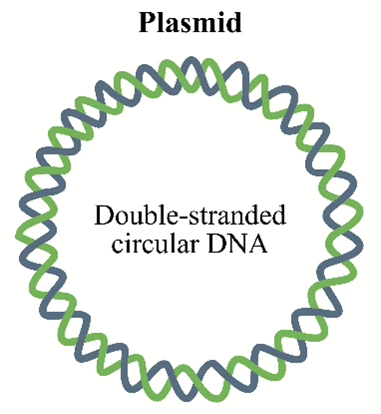
Plasmids are small circular double-stranded DNA that occurs naturally in bacteria and some eukaryotes. Plasmids usually provide bacteria with genetic advantages, such as antibiotic resistance genes that can be passed from one cell to another in a process called conjugation, and that information is inheritable. The plasmid can also replicate independently, meaning the cell doesn’t have to go through division for it to be replicated. Scientists then started using plasmids as a tool for genetic engineering, such as cloning, transferring, and manipulating genes, and for that purpose they started calling them vectors. When inserting genes into the plasmid vector, it becomes a recombinant plasmid, that can be used for bacterial transformation, when the recombinant plasmid is introduced into the bacteria.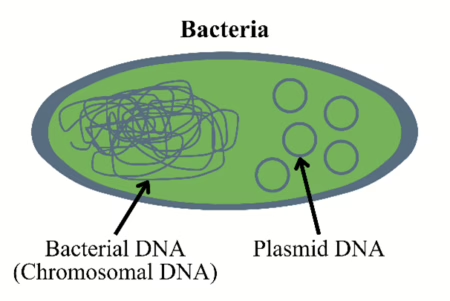
Now, our gene of interest (GoE) is inserted into a bacteria. If the bacteria is your final target, you can stop here, if not, there are other steps. Let’s suppose your final target for this transformation is a plant, in this case, the most common method used is Agrobacterium-mediated transformation.
How transgenics are made
There are many ways a transgenic can be developed and each group of living things will have its own protocols. For plants, there are at least five ways to transform a cell. The first and most common is Agrobacterium-mediated plant transformation. This name comes from the organism used in the transformation, which is Agrobacterium tumefaciens (and other related Agrobacterium species), a bacteria known as a plant pathogen that can transfer DNA to plant cells. Therefore, the recombinant plasmid is inserted into the Agrobacterium tumefaciens cells, that will later transfer that DNA to the plant cell. The other ways, such as microparticle bombardment, electroporation, aerosol beam injection, and PEG-mediated are all direct gene transfer technologies. In microparticle bombardment, micron-sized metal particles are coated with plasmid DNA and accelerated into target cells at speeds high enough to penetrate the cell wall, but low enough to avoid causing lethal damage. Electroporation is used in plant cells to induce the uptake of plasmids, but first the cell wall of the plant is degraded (producing a protoplast) because it is a major barrier to the diffusion of macromolecules. Aerosol beam injection uses high velocity aerosol particles with the exogenous DNA to penetrate targeted cells. Chemically-mediated transformation uses the same mechanism as electroporation, but instead of an electric pulse, the uptake of plasmids is induced by a chemical, for example polyethylene glycol (PEG) and calcium ions.
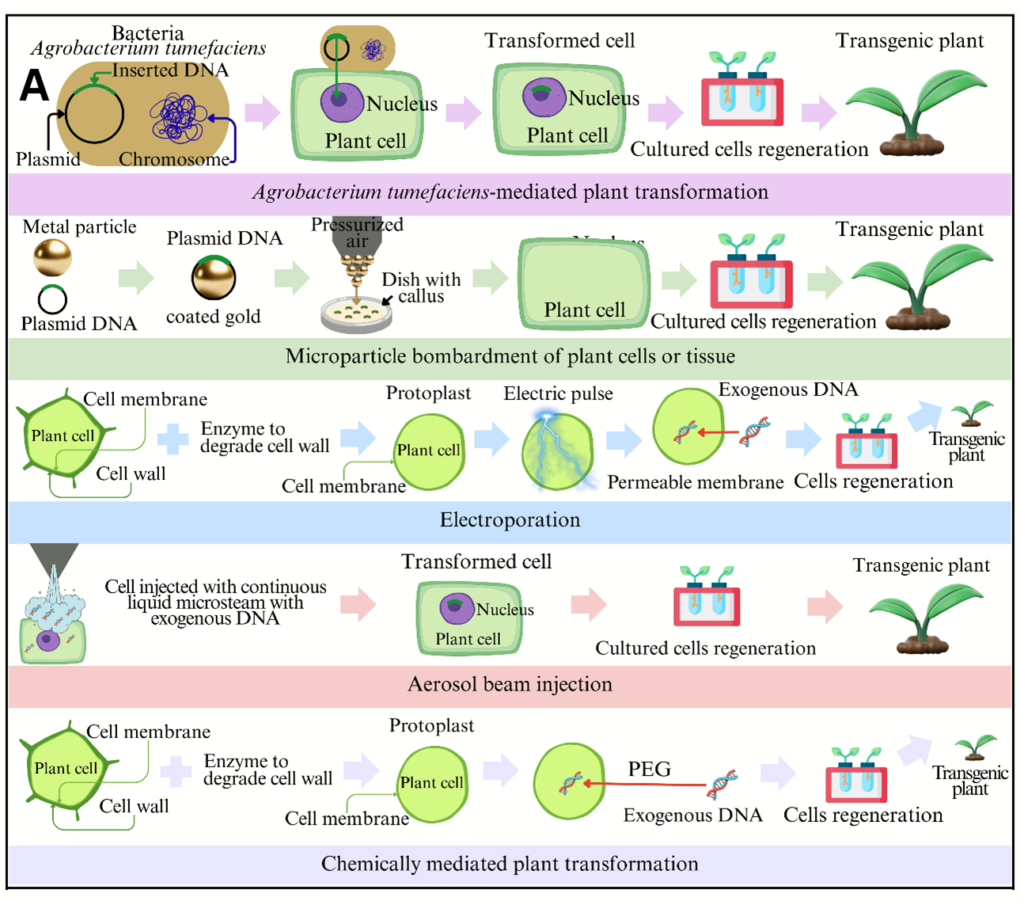
Regardless of the method used, the plant cells transformed are either callus cells, protoplasts, or embryonic tissue. Those would have to be regenerated into a plant that will grow as a transgenic plant.
Traits of transgenic crops
1. Disease Resistance
There are seven transgenic crops resistant to different viruses (bean, papaya, plum, potato, squash, sweet pepper, and tomato). In this case, the main mechanism used to confer the resistant is by inserting a part of the virus genetic material into the plants genome. Usually, the genes included encode the viral replication protein or coat protein; either will work as a “pathogen-derived resistance” mechanism (i.e. using the pathogen’s own genome to confer resistance to an organism). This is an example on how inserting exogenous DNA can improve resistance to diseases.
2. Insect and Nematode Resistance
Another common trait in transgeny is insect resistance, that has already been introduced in cotton, cowpea, eggplant, eucalyptus, corn, poplar, potato, rice, soybean, sugarcane, and tomato. The gene encoding the resistance mostly comes from bacteria, specifically Bacillus thuringiensis, which confers the abbreviation “Bt” for transgenic crops resistant to insects. The gene that comes from Bt produces an endotoxin that damages the digestive system of insects. Nematodes are round-worms that live in the soil and can sometimes damage plants by feeding on and within the roots. There are also beneficial nematodes essential for nutrient cycling, but here we will be talking about the ones who cause harm to plantations. Nematode resistance was only introduced on soybean, and the organism donor of the gene that confers the resistance is the same Bt that confers resistance to insects.
3. Abiotic stress tolerance
Corn, soybean, sugarcane, and wheat are the crops with abiotic stress tolerant transgenic varieties. In corn, the bacterium Bacillus subtilis is the gene donor of cold shock protein B, that maintains normal cellular functions under water stress conditions (drought). In wheat and soybean, the sunflower is the gene donor to confer tolerance to drought stress. In sugarcane, Escherichia coli and Rhizobium meliloti bacteria are the gene donors that confer drought stress tolerance.
4. Modified product Quality
Modified product quality by transgenic breeding has been done in 11 different crops, for different outcomes, such as modified fatty acid profile, increased digestibility by animals, modified flower color, increased nutrition, delayed ripening, among others. The main gene donor was bacteria, but there were others such as plants, yeast, fungi, algae, microalgae, protist, animals, and viruses, as shown in the table below.
Crop | Gene donor | Modification |
|---|---|---|
Canola | Plant, yeast, fungi, algae, microalgae, and protist | Modified fatty acid profile |
Bacteria | Phytase production to make phosphorus available for monogastric animals | |
Carnation | Garden petunia, pansy, sage, and carnation | Modified flower colour |
Corn | Archaea | Modified alpha amylase to become thermostable |
Oubli plant | Starts producing a soluble protein with a sweetness that is approximately 1,500 times greater than sucrose | |
Bacteria | Starts producing phytase enzyme to make inorganic phosphate available when used for animal feed | |
Bacteria | Enhanced production of amino acid, lysine | |
Bacteria | Increased digestibility by phytase enzyme | |
Melon | Escherichia Virus T3 | Starts producing S-adenosylmethionine hydrolase enzyme for delayed ripening |
Petunia | Petunia and bacteria | Change the colour of the flower |
Pineapple | Tangerine | Increased beta-carotene levels |
Pineapple | Delayed ripening | |
Rice | Japanese cedar plant | Trigger immune tolerance to pollen allergens in humans |
Corn and bacteria | Enhanced provitamin A content | |
Rose | Pansy and torenia plants | Changes in the colour of the flower |
Safflower | Cattle | Starts producing an enzyme with the ability to coagulate milk so it can be used in cheese-making |
Soybean | Julia's primrose and fungi | Increased production of omega-3 fatty acid |
Tomato | Escherichia virus T3 | Delayed ripening by reducing S-adenosylmethionine hydrolase enzyme |
Bacteria | Delayed ripening by producing 1-amino-cyclopropane-1-carboxylic acid deaminase enzyme | |
Snapdragon plant | Upregulates anthocyanin and antioxidant biosynthesis, changing the colour of the flower |
5. Altered growth/yield
Eucalyptus started producing a recombinant protein from thale cress that promotes a faster growth. Corn had its biomass increased by receiveing a protein from the same gene donor, thale cress. Lastly, soybean had its growth and reproductive development increased by receiving proteins also from thale cress.
6. Pollination control system
Pollination control system was done by transgenic breeding in three different crops. Canola received genes from bacterium Bacillus amyloliquefaciens that encodes an enzyme which causes male sterility, and also to restore fertility. In chicory, the same gene donor is used for male sterility. Corn also received an enzyme from Bacillus amyloliquefaciens to cause male sterility; the plant received from another corn variety an enzyme that makes pollen sterile, and another protein that restores the fertility; and E. coli also acted as gene donor of an enzyme that causes male sterility in corn.
7. Herbicide Tolerance
The most abundant between them all, herbicide tolerance was achieved in 17 different crops. The herbicide tolerance characteristic was obtain either by bacterium or plant working as gene donors, as shown in the table below.
Crop | Gene donor | Tolerance to... |
|---|---|---|
Alfalfa | Agrobacterium tumefaciens bacterium | glyphosate |
Canola | Bacillus licheniformis bacterium | glyphosate |
Agrobacterium tumefaciens bacterium | ||
Ochrobactrum anthropi bacterium | ||
Streptomyces hygroscopicus bacterium | glufosinate | |
Streptomyces viridochromogenes bacterium | ||
Thale cress | imazamox | |
Stenotrophomonas maltophilia bacterium | dicamba | |
Klebsiella pneumoniae subsp. Ozaenae bacterium | oxynil | |
Carnation | Tobacco | sulfonylurea |
Chicory | Streptomyces hygroscopicus bacterium | glufosinate |
Corn | Streptomyces viridochromogenes bacterium | glufosinate |
Streptomyces hygroscopicus bacterium | ||
Corn | sulfonylurea & imidazolinone | |
glyphosate | ||
Agrobacterium tumefaciens bacterium | ||
Arthrobacter globiformis bacterium | ||
Streptomyces sviceus bacterium | ||
Ochrobactrum anthropi bacterium | ||
Sphingobium herbicidovorans bacterium | 2,4-D & aryloxyphenoxypropionate | |
Stenotrophomonas maltophilia bacterium | dicamba | |
Cotton | Tobacco | sulfonylurea |
Klebsiella pneumoniae bacterium | oxynil | |
Delftia acidovorans bacterium | 2,4-D | |
Streptomyces viridochromogenes bacterium | glufosinate | |
Streptomyces hygroscopicus bacterium | ||
Bacillus licheniformis bacterium | glyphosate | |
Arthrobacter globiformis bacterium | ||
Agrobacterium tumefaciens bacterium | ||
Corn | ||
Pseudomonas fluorescens bacterium | isoxaflutole & related | |
Stenotrophomonas maltophilia bacterium | dicamba | |
Creeping Bentgrass | Agrobacterium tumefaciens bacterium | glyphosate |
Eucalyptus | Agrobacterium tumefaciens bacterium | glyphosate |
Flax | Thale cress | sulfonylurea |
Polish Canola | Streptomyces viridochromogenes bacterium | glufosinate |
Agrobacterium tumefaciens bacterium | glyphosate | |
Ochrobactrum anthropi bacterium | ||
Potato | Agrobacterium tumefaciens bacterium | glyphosate |
Rice | Streptomyces hygroscopicus bacterium | glufosinate |
Soybean | Streptomyces viridochromogense bacterium | glufosinate |
Streptomyces hygroscopicus bacterium | ||
Thale cress | imidazolinone | |
Delftia acidovorans bacterium | 2,4-D | |
Sphingobium herbicidovorans bacterium | ||
Corn | glyphosate | |
Agrobacterium tumefaciens bacterium | ||
Bacillus licheniformis bacterium | ||
Soybean | sulfonylurea-based | |
Pseudomonas fluorescens bacterium | isoxaflutole & related | |
Stenotrophomonas maltophilia bacterium | dicamba | |
Rice | mesotrione | |
Oat | ||
Sugar Beet | Agrobacterium tumefaciens bacterium | glyphosate |
Ochrobactrum anthropi bacterium | ||
Streptomyces viridochromogenes bacterium | glufosinate | |
Stenotrophomonas maltophilia bacterium | dicamba | |
Sugarcane | Agrobacterium tumefaciens bacterium | glyphosate |
Tobacco | Klebsiella pneumoniae bacterium | oxynil |
Wheat | Agrobacterium tumefaciens bacterium | glyphosate |
Conclusion
Although the discussion so far has focused on plants, many other organisms have also been genetically modified, including bacteria, yeast (a unicellular fungus), and animals.
One of the first commercial products developed using genetic engineering was human insulin. Before genetically engineered insulin became available, people with diabetes were treated with insulin extracted from pigs or cows. While these animal insulins are similar to human insulin, they are not identical, and some patients experienced allergic reactions because of small structural differences. Scientists solved this problem by inserting the human insulin gene into the bacterium E. coli, allowing the bacteria to produce insulin that is highly pure and almost identical to the insulin naturally produced by the human body.
Genetically modified bacteria have also been developed for other purposes. For example, some have been engineered to help break down plastics in the environment, including those found in the ocean.
Yeasts are another group of organisms frequently modified by biotechnology. They can be engineered to improve fermentation processes used in the production of foods and beverages, as well as in the production of biofuels such as ethanol.
Animals have also been genetically modified for specific purposes. Others are modified for medical or dietary purposes. For instance, GalSafe pigs have been engineered so they do not produce the alpha-gal sugar, a molecule that can cause allergic reactions in some people. Because of this modification, these pigs may be safer for consumption and may also serve as potential sources of medical products, such as tissues or organs for transplantation.
Despite the strong scientific consensus on the safety and benefits of transgenic organisms, this technology remains one of the most vilified innovations in agriculture. Transgenic crops help mitigate environmental and social challenges, particularly in developing countries where food insecurity is widespread and the impacts of the climate crisis are more severe. Regrettably, only one-third of the benefits of transgenic crops have been experienced due to barriers and bans against the technology. The cost of these barriers and bans are higher food insecurity levels.
