
Disease From the Other Side of the Fence

Disease From the Other Side of the Fence

Let's talk a little bit about agricultural pests.

What probably comes to mind are insects, worms, and weeds – the traditional field offenders. However, large game like deer and elk can also be legitimate pests for livestock producers. Between physical damage and threats to animal health, wildlife exposure can challenge farmers’ production season and sustainability. Since 2016, Canadian legislation has been evolving in response to gaps in livestock traceability and while our food systems are considered some of the safest globally, wildlife interactions with livestock are a poorly understood gap in our production safety.

What's the Harm?

For many, it is an enjoyment to see wildlife roaming in the distance. Wildlife biodiversity is an indicator of ecological strength, bringing species-specific land benefits and hunting opportunities that can positively shift the natural landscape and interactions therein. Overall wildlife tends to avoid Canadian croplands in favour of more lush, less trafficked areas but when they are present, there can be serious crop damage, feed/forage loss, and disease risk associated with farm mingling. Of those three broad damage categories, the potential cross-contamination from wildlife to livestock has less direct policy options than the alternative worst-case scenarios.

When it comes to livestock diseases from wildlife (for the purposes of this blog, we are excluding poultry diseases like avian flu), the primary concerns are chronic wasting disease (CWD), bovine tuberculosis (TB), and brucellosis. All three of these diseases are difficult to detect before symptoms show and are zoonotic, meaning they can spread between species, including to humans, in some cases. In large thanks to Canada’s stamping out legislation, which requires infected animals of certain diseases to be reported to the Canadian Food Inspection Agency, subsequently destroyed to prevent disease spread, and the remaining farm to complete quarantine, there are low incidence rates or complete eradication of the three diseases mentioned. However, all three are present in wild reservoirs, meaning there are pockets of wildlife vectors known to regulatory agencies that can be used to establish control and elimination strategies.

The risk to producers comes from the unfortunate truth that most testing, cleaning, foregone sales, and financial losses incurred during quarantine are realised by the farm, incentivising them to protect their herds from initial infection, as rare as it may be. Canada’s food systems are for the timebeing protected from the economic burdens of an outbreak that have been felt internationally to the tune of hundreds of millions (USD); in Canada, animals that are ordered destroyed by the government are compensated, provided compliance with legislation and requirements.

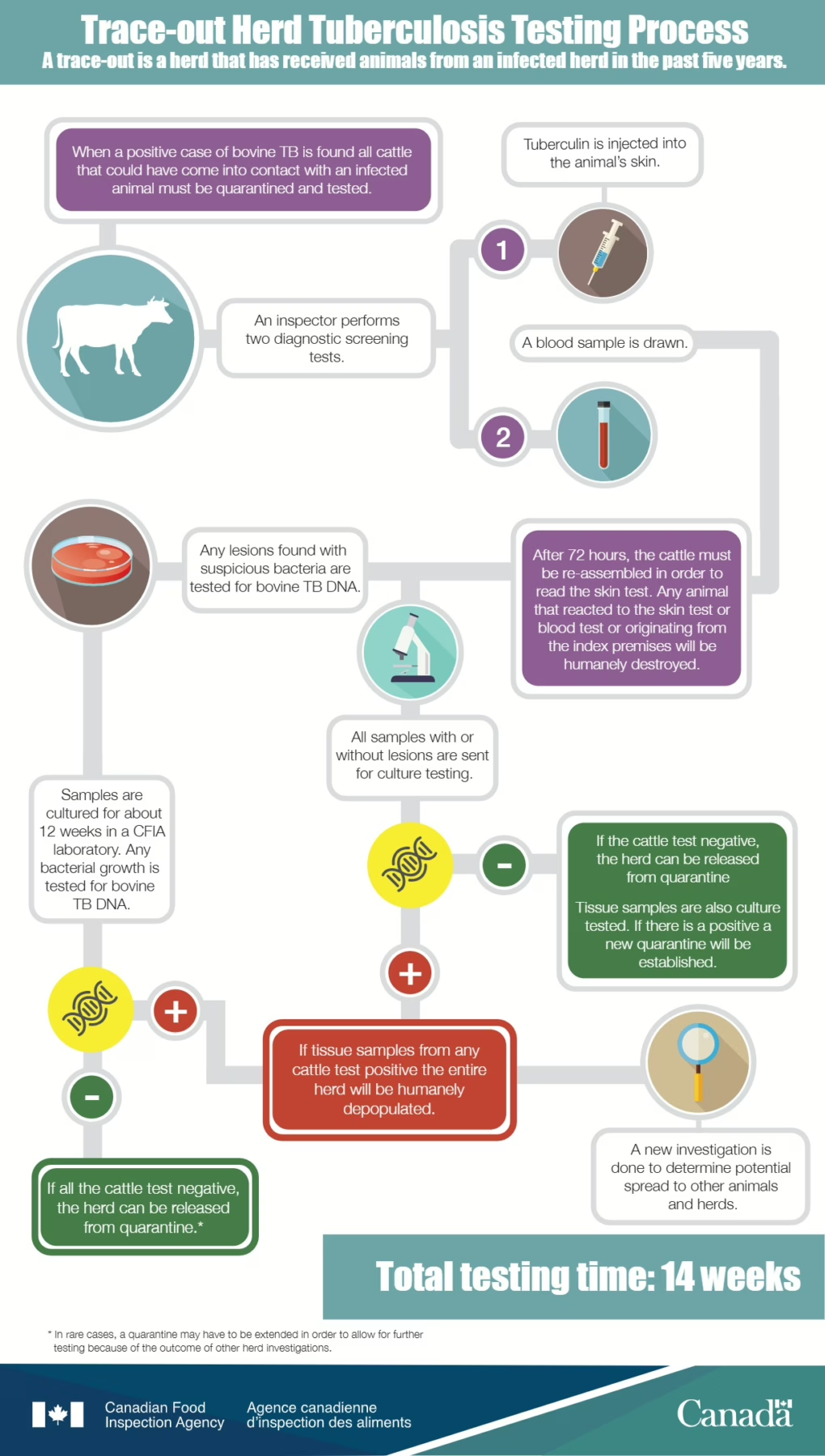
Flowchart of how trace-out tuberculosis testing happens in cattle, from week 1 to 14
Trace-out testing process of bovine tuberculosis (Canadian Food Inspection Agency 2015)

Where's the Risk?

TB is a contagious bacterial disease transmitted directly between animals with long term dormancy; it can reduce appetite, weight, and animal strength if progressed far enough to present clinically. Even before symptoms are obvious, TB causes lymph node inflammation; meat processors are trained to look for traits like this in carcasses and trace the positive result back to the impacted herd for disease eradication. Numerous species are vectors for TB however, in a 2022 review of over 530 academic papers, it was determined that understanding how TB could be transmitted from wildlife to domestic livestock was overall lacking, and there was an over-prioritization of investigations into European badgers as a transmitter. However, at of the beginning of 2025, Canada’s only known TB population was in a northern Alberta wood bison herd. The growing threat of TB in Canada came from a subsequent emergence in elk transmissions to cattle, although other species like wild boar and deer should not be discounted vectors.

Brucellosis, another bacterial disease, generally presents reproductively, causing reduced pregnancy rates, infertility, abortions, and other birthing issues in the livestock it infects. The infection has been eradicated from domestic livestock but there have been instances in wild Canadian herds. Many species can be impacted by brucellosis either through direct contact or consumption of contaminated tissues and fluids, including to humans, which is why climbing brucellosis exposure in Canada’s arctic caribou and muskox herds can pose serious shifts in the health and safety of northern communities’ traditional foods supply. (It should be noted that officials are not recommending against sourcing traditional foods, but rather avoiding meat, milk, fat, etc. sourced from animals that appear sickly or abnormal.)

Table 1. Summary of new annual herd infections for a given disease by animal type (unique herds infected)
2021
2022
2023
2024
2025
2026*
Total herds
Beef (1)
Beef (1)
Dairy (1)
3
Caribou (1)
Muskoxen (1)
2
Elk (11); Deer (2)
Elk (4); Deer (2)
Elk (5); Deer (3)
Elk (5); Deer (1)
Elk (9)
Elk (2); Deer (1)
45
Total herds
14
7
9
7
10
3
50
* as of March 2, 2026

Signs of brucellosis are much less obvious to hunters/trappers than CWD: a prion disease causing neurological damage. There are no cures for directly-transmissible prion infections which include other concerning diseases like bovine spongiform encephalopathy (Mad Cow Disease), and the symptoms before death can be painful. There is no evidence that CWD can spread to humans the way brucellosis can, but it adheres to similar precautionary measures given its growing detection in deer and elk across the prairies. For domestic producers, CWD herd certifications exist to verify biosecurity rigor and national compliance.

What is Being Done?

Crop and forage growth are attractive to wild species, especially in winter months where food and water sources are scarce. In Saskatchewan, our producers have insurance options to compensate them for crop, hay, or grain losses as a result of wildlife and compensate for establishing preventative practices. It may be worth noting that a variety of deterrents may be required to prevent wildlife from becoming accustomed to the technique, as has been identified by Parks Canada to be a problem on Quebec Island. More research will have to be put in to understanding the dynamics of zoonotic diseases, as literature is largely absent of direct vs indirect economic burden discussions, potentially limiting our ability to make conclusions about the cost-efficiency of various biosecurity controls. To maintain the agriculture sector’s slight cushion from wildlife-transmitted disease, analysis should turn towards upstream evaluations for protection.
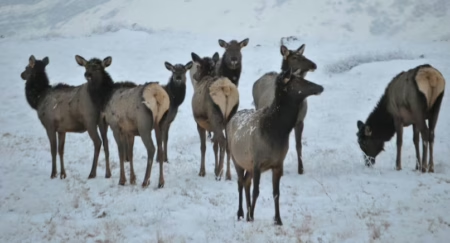
Saskatchewan elk herd
(Mark Boyce – CBC News, 2026)

For individuals in Saskatchewan who have had a recurring history of elk-related damage claims, the provincial environment ministry is granting depredation permits for the beginning of 2027 (pending regional assessment). This would allow select individuals to hunt elk out of season exclusively for the purpose of preventing continued crop loss, grain cleaning, and potential disease transmission.

Proposed changes to CWD regulations in the fall of 2025 suggested regional rankings of CWD detections, classifying the severity of transmission in part based on whether wild populations are already known vectors. As a result, it has also been proposed that provinces in which wild populations of deer and elk are known carriers of CWD, culling should not be used as an eradication method, as it would not change the likelihood of contracting CWD in subsequent exposures. If these changes pass, it would be an incredible shift for Canada’s One Health animal health policy.

Biosecurity and traceability will continue evolving in response to emerging threats to animal health. As we embrace biodiversity to maintain Canada’s landscapes, the health of wildlife will increasingly become a vulnerability in the safety of our food systems. Our current networks accommodate herd-level decision making therefore, limiting harmful exposures can maintain farm health.

Leave a Reply

Your email address will not be published. Required fields are marked *

SAIFood uses Accessibility Checker to monitor our website's accessibility.