


 Brazil is the world’s leader in coffee production. In 2023 alone, Brazil produced 3.4 billion tonnes of coffee, corresponding to more than 30% of the global coffee production. 38% of the coffee production in Brazil comes from smallholder farmers, where the labor force is composed by at least 50% of family members. In Brazil, smallholder family farmers still represent 67% of the agricultural labor force of the country, but their contributions are shrinking.
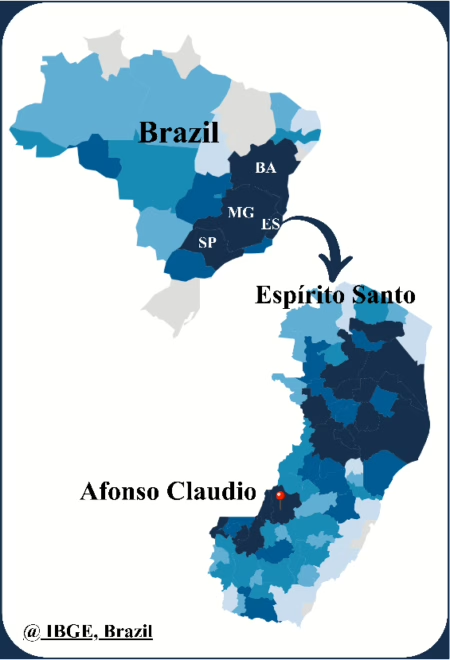
The State of Espirito Santo (ES on map) is the second largest coffee producer in Brazil, only behind Minas Gerais (MG), followed by São Paulo (SP) and Bahia (BA).
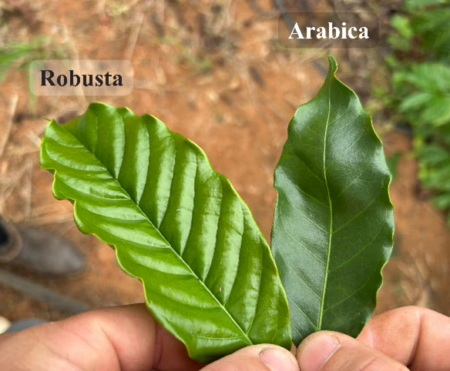
 In the city of Afonso Claudio, coffee cultivation is the primary economic activity, with high-quality beans produced because of ideal climate, high altitude, and favorable soil conditions. Both Arabica and Robusta coffee are produced, and Arabica coffee has special varieties in the region (Arabica and Robusta – one way of differentiating them is by looking at the leaves).
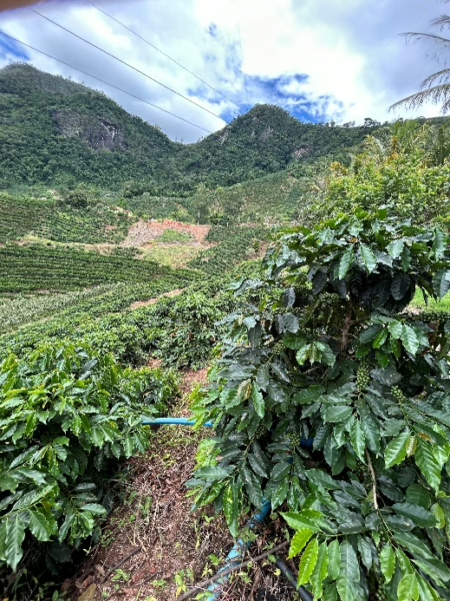
 Here, I will delve into the process of coffee production by the smallholder farmers from a specific location in Afonso Claudio, called Ribeirão do Costa. There, they have a strong sense of community, with the same families running the farms as generations ago. Because coffee is usually planted in hills in that region, there is not much a machine can do in the field, so most of the process is handmade. The terrain there is very uneven, and the coffee is cultivated in the many mountains around the family houses. The great majority of the plantations are not irrigated, but this has become more common in the last 5 years because of the climate change affecting the region.
Before planting coffee, a planting pit is made. The soil is tested for pH value, acidity is corrected with lime, and fertilizer (NPK 19-04-19) is added to the pit. After that, a seedling is planted.
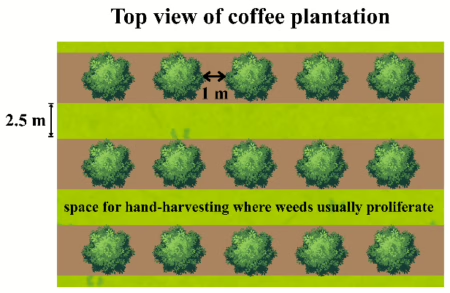 Coffee is usually planted in the rainy season, which is from October to March in this region. A small corridor is left empty between coffee rows for the farmers to work on the plants. The rows are usually 2.5 meters wide and can be more than 10 meters long. In the coffee row, the distance between every plant is usually 1 meter (high density planting).
After planting coffee, it takes two years to start producing. If the plant doesn’t die from disease or fire, it can last for many decades. The only difference in the treatment between young and mature plants is that for young plants, there is no herbicide applied for the first two years; the weed must be controlled by hoe or motorized brush cutter only.
The harvesting season in the region starts in May. The first harvesting is usually low in grain volume but after four years, the plant is considered an adult and has its full yield. From now on, we will discuss the care of adult coffee plants, meaning 4+ years old.
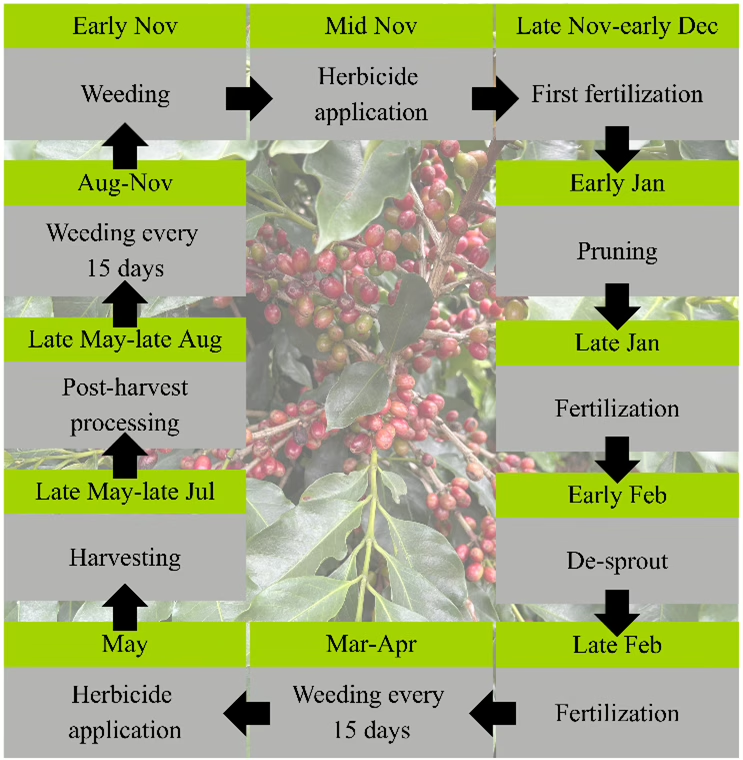
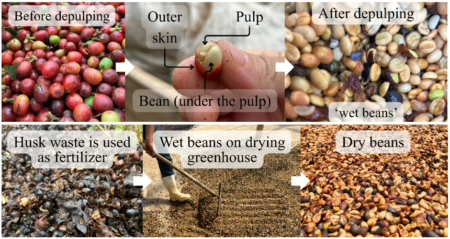
The first process after harvesting the coffee cherries is depulping, carried out using a coffee depulping machine. The wet coffee beans are placed in a drying greenhouse, where they remain for 3–5 days. During this period, the coffee is raked every hour under sunny conditions to ensure uniform drying.
After drying, the moisture content is measured using a coffee moisture meter, and it must reach 11–12% before the next step. The coffee is then hulled using a hulling machine. Every 60 kg of hulled coffee is commercialized as a coffee bag.