By Darryl Darwent (originally posted to Flickr as John Deere 9630T) [CC BY 2.0 (http://creativecommons.org/licenses/by/2.0)], via Wikimedia Commons. https://upload.wikimedia.org/wikipedia/commons/6/6a/John_Deere_9630T.jpg
Have you ever felt like you never really owned something you bought (perhaps your cat)? Well this could be the case for future John Deere equipment owners. In early 2015, the farm machinery company expressed to the US Copyright Office, that their computer technology (digital and chip) is an essential part of the vehicles operation and purchasers of the equipment don’t acquire copyright of this essential software. What this would mean for owners of John Deere equipment is that while they own the right to operate the vehicle they don’t have the right to modify the software. In the digital world we live in this would not be the first item we purchase the right to use and do not own: digital books, Netflix, computer software, music and our beloved apps. Now the question becomes, is digital technology enough to restrict your ownership of the tractor or car you purchase?
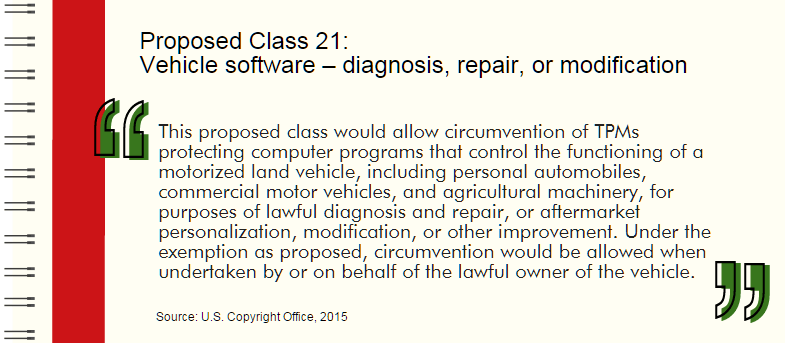
The possibility of producers not fully owning their equipment may be alarming, raising a number of questions. There are two perspectives, creators and consumers. The creator, John Deere, has filed registration of ownership to the 2014 Copyright Exemption list on Technical Protection Measures (TPM). Class of the US Copyright Offices proposed exemption allows the bypass of TPMs which protect vehicle computer programs. Although this can only be done by the vehicle owner, including agricultural machinery, John Deere suggest this infringes on their copyright. They identify a number of areas of concerns: hackers, pirating of software and safety. Safety is a legitimate concern and policies will need to be put in place if Class 21 allows owners of vehicles to make changes to their vehicles computer programming which could put the public at greater risk and circumvent regulated safety protocols.
On the consumer side, if John Deer’s claims against the proposed exemption are granted, this could result in farmers owning the tractor, but not really having full ownership because they don’t have the rights to the technology. Could this affect producers’ right to sell their farm equipment? Might John Deere’s copyright claims grant them the ability to restrict resale? Once a producer is done with a piece of equipment, would they be required to sell back to a John Deere dealership? Or would the farmer have the right to resell the equipment to whomever they wanted? These are important issues that remain to be resolved.
This topic could also be troublesome for future innovations. If John Deere and major automakers impose copyright laws preventing modification by individuals to the digital components, does this potentially create a barrier? It’s not always the case that innovation occurs within a corporation. Technological advances come from a range of sources and imposing strict TPM could limit these innovations.
For now, this proposed Class 21 exemption and John Deere’s claims raises interesting questions about the ability of farmers’ right to use and resell equipment. Ownership of the data collected by the software is an additional topic that requires answers. Farming is becoming hi-tech and serious concerns about the ability to use and own technology abound.
Over the past few months, there has been an extreme amount of social media propaganda… Read More
With the amount of information in the world, it can be easy to get lost… Read More
The DNA Series: This is the last blog in the DNA Series (boo!), and we're… Read More
The Heated Price of Coffee My morning starts with multiple cups of coffee. No, no… Read More
In January 2026, the Canadian government was able to reach an agreement with the Chinese… Read More
Agriculture Myth Busting Food preservatives have been linked to a variety of scary health concerns.… Read More