
Nutrition Hacks and the Protein Obsession

Nutrition Hacks and the Protein Obsession

By 2050, we are expected to globally consume twice the protein we currently do. Through various blogs on SAIFood, we have been tracking the growing popularity of protein for years. Between investments into plant-based products, unconventional protein innovations, and the rise in social media-driven health obsessions, protein has evolved beyond a macronutrient to become a mascot for the healthy eating.

Except the protein market dynamics have been more interesting than anything else, with the popularity having very little to do with health or sustainability, comparatively speaking. When we are worried about not eating enough, we tend to overconsume and what we are consuming is not necessarily where the investments have been spent. Despite very visible failures and player departures, the protein market continues to grow by approximately eight per cent annually, to the point that there are now four times as many high protein products available as there were a decade ago.

I want to clarify that this discussion does not look at comparing the environmental sustainability of protein sources. Overall, greenhouse gas emissions increase with nutrient density, making plant-based a seemingly superior product to animal-based products however, those analyses are naïve of environmental markers beyond emissions such as biodiversity, water management, land use change, and soil health. This blog instead focuses on why the demand for protein has exploded and how it will impact the market going forward.

How Much is Too Much?

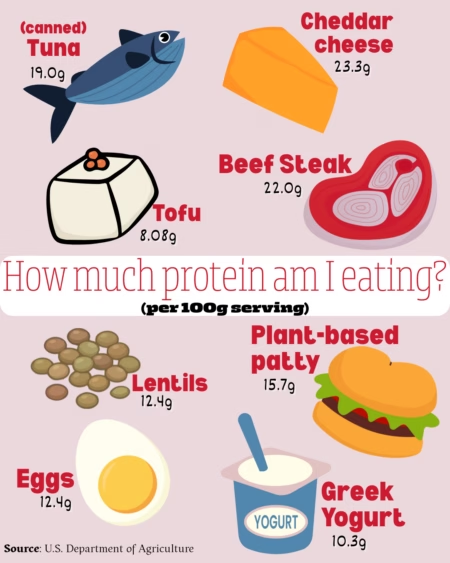
Approximate protein content per 100g servings of various whole foods (source: USDA)Fundamentally, protein has not undergone the same negative health connotations of excess as fat or carbohydrates, leaving room for market growth and oversaturation. Between 2019 and 2023, 85% of the new pea protein products launched in Canada were for human food consumption, mostly as meat alternatives and high protein snacks. It is worth mentioning that, in response to the growing value of pea protein, Canada is ramping up its pea processing capacity (e.g. Roquette, Louis Dreyfus Company) in order to keep the high protein momentum going.

The issue is that the desire to consume more comes from the false equivalence, or rather unsubstantiated claims specifying that protein is muscle-building. It is necessary, of course, but in balance with so many other nutritional considerations. Athletes, who often have body and health markers we may aspire to copy, are often consuming more food altogether, not just more protein and yet, protein is the focus. The addition of more products with enhanced protein means it is much easier (for middle to high income countries) to overconsume protein. For example, the Canadian and American recommendations are about 90 grams of protein per (adult) person per day – the equivalent of about two chicken breasts. Given that it is recommended every meal keep protein in mind and the multitude of sources for protein outside of meat or animal products altogether, for food secure or even mostly food secure households, the daily recommendation is likely already met. The increasing popularity of GLP-1s, which reduce body weight and encourage protein consumption for satiety and to counteract negative muscle effects, has exacerbated this effect.

It's not about the protein...

… it’s about convenience.

When you ask individuals to change from the norm, regardless, of benefits, you have to do so with the least amount of disturbance. Marketing products specifically as “high protein” takes some of the work off the consumer, who likely has additional household considerations and wants to keep the flavours and snacks they enjoy. If it were truly only about how much protein per serving a product has, Canadians would purchase more extra lean ground beef than we do.

Consumers may say they value protein-enhanced pasta or bread loaves over pot roast, but does that really say anything about protein? How do you compare spaghetti to beef? While some consumers will claim there is a protein ranking system making some sources better than others, in reality, beef is still an anchor protein (i.e. used as a meal-planning staple) for 65% of households. This suggests that conventional (animal-based) protein is unlikely to be replaced completely by plant-based alternatives or enhanced products. Although adding protein to bread and tortillas meets the desire to keep protein recognizable and conveniently in household staples, it works against the trends calling for affordable, unprocessed, high protein foods. Whole foods, in general, cost more per calorie than processed foods, especially in the case of protein. Meat and dairy have consistently some of the highest grocery prices, pushing cost-conscious households towards processed options. However, when it comes to the protein industry, processed goods are not reliably cheaper.

Consider whey, a highly processed ingredient with a market size over half of what is occupied by breakfast cereal. The global demand for protein has led major brands like Starbucks and Tim Hortons to stock up on whey to fulfill orders for new high protein beverages, ultimately increasing the unit price to something outside of the budget of many consumers caught in the cost of living crisis. Plant-based alternatives are also heavily processed, but the quality of protein is not necessarily compromised. The cost, being on average 38 per cent higher than conventional meat options has not yet been enough to keep the market thriving. This was the case with cricket protein, whose high price kept consumers from experimenting with the product in order to circumnavigate the ‘ick’ factor.

There are a multitude of high protein options on the shelves this year and many more considerations than just grams per serving. Grocery purchasing decisions are complicated by economics, which tend to be inhospitable to newness despite active calls for availability. The protein industry is growing faster than we know how to respond, leaving investments unrealized and an overabundance of products to a society largely sufficient. It does not matter how you meet your macronutrient requirements, but we cannot pretend our protein obsession is anything more than a nutrition hack.

Leave a Reply

Your email address will not be published. Required fields are marked *

SAIFood uses Accessibility Checker to monitor our website's accessibility.